It was July 2016 and we finally had a workable plan to move onto our block. My husband, Matt, had just been made redundant and had picked up some contract work, so things were falling into place. We had spent countless hours, evenings and weekends drawing plans, getting quotes from tradies and suppliers, and preparing all of the paperwork to submit to Council. We were reasonably confident that we had a realistic budget, and we were super excited to get things rolling.
We had also grabbed every opportunity to talk to people that could give us insight and advice, and this had a huge positive impact on getting our plan off the ground, and on the final result of the build. We spoke to sparkies, plumbers, concreters, earthworks people, septic system installers, the shed kit provider, the Council Planning Division, people who had already built shed houses, people who knew lots of useful stuff about solar mass, aspect, and insulation… anyone who could assist us with identifying any potential issues or obstacles, point out rules we weren’t aware of, give us tips on how to get things done efficiently and in what order, and also share their (or others’) mistakes. (I’ll give all those morsels of wisdom their own special post). I think there’s a saying about the 3 P’s – Planning, Planning and Planning – and if there is one piece of unsolicited advice we would give to anyone considering an unconventional DIY build, it would be to put the brakes on and give as much time as you can to this stage. It was priceless for us in terms of getting the result we were hoping for, it probably saved us thousands of dollars, and it definitely saved us a lot of time and angst down the track.
Anyway, despite all that planning, we did run into some issues that slowed us down – actually, they stopped us in our tracks – and here began our third extended lesson in patience. The first problem was a mistake we made: we had not provided a specific site and soil survey for our block (we had submitted the survey that had been done originally for the subdivision DA by the previous owners). Our entire application was put on hold until we could provide this survey. We promptly called the geotechnical consultant who had produced the subdivision survey. He had just retired and was about to leave the country. He referred us to a colleague who was run off his feet with work, and we settled down to wait (not very) patiently till he could get to us.
I think he took pity on us, as just four weeks later, we gratefully submitted his report to Council and our application was up and running again. And then a minor miracle: because we had opted to do a Complying Development rather than a Development Application (DA), it only took one week to get our approval from Council to start! That was a momentous day. It was now the end of August and we had set an ambitious goal for ourselves: to move in before Christmas. It was feasible given the small size and simplicity of the house we’d planned; we just needed things to go smoothly from here on in.
The second, and far bigger issue that stopped us in our tracks was that it had started to rain. And rain….and rain some more. The earthworks couldn’t start until there had been at least a couple of dry days, but on the rare occasions that occurred, we were just one job in a long line of customers awaiting earthworks. By the end of September the ground was so completely saturated that we were advised we needed at least two weeks of dry, warm weather before earthworks could start, to allow the ground to dry out and firm up sufficiently. We heard lots of stories that spring of diggers, tractors, and trucks attempting to get into paddocks or other wet areas and getting bogged, and bigger equipment going in to attempt to drag them out, and all ending up stuck there for the next several months. It was a very difficult season for many tradies and building suppliers who had to survive a long stretch of little or no income while the weather refused to cooperate. In fact, according to the Bureau of Meteorology, the four months from June to September 2016 were the wettest such period on record for the ACT region, with rainfall 127% above the average.
We were also awaiting earthworks for the water tank pad, a crucial component of the build as our town does not have a water supply. The irony wasn’t lost on us that we were unable to put a rainwater tank in because it was raining too much.
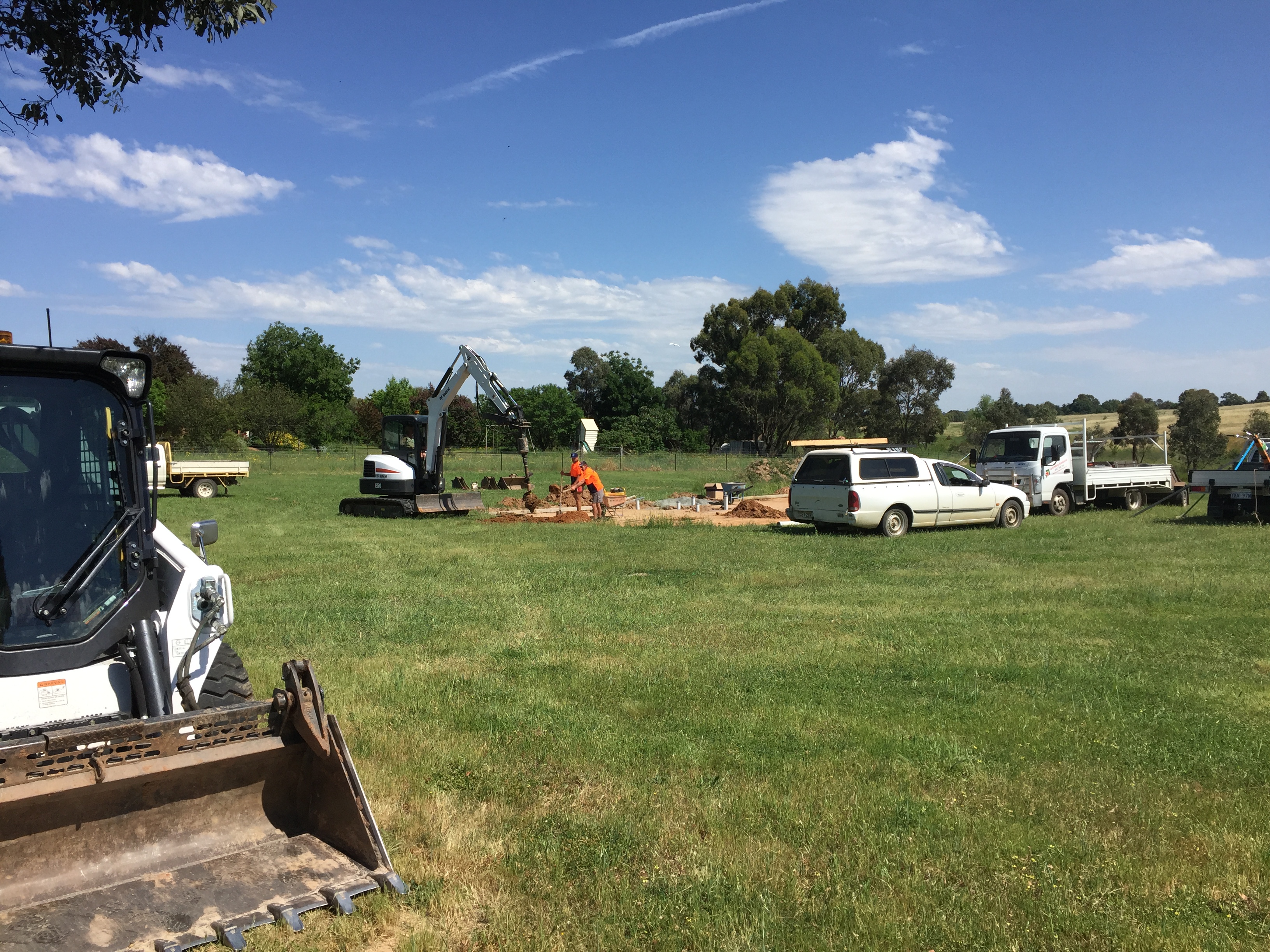
In late October, a small glimmer of hope: we broke ground!! It stopped raining just long enough for the earthworks to be done for the house and water tank. Yippee! It was such a huge relief to finally make some progress, and even though the rain started up again and put the concreting on hold for another six weeks, at least we had begun.
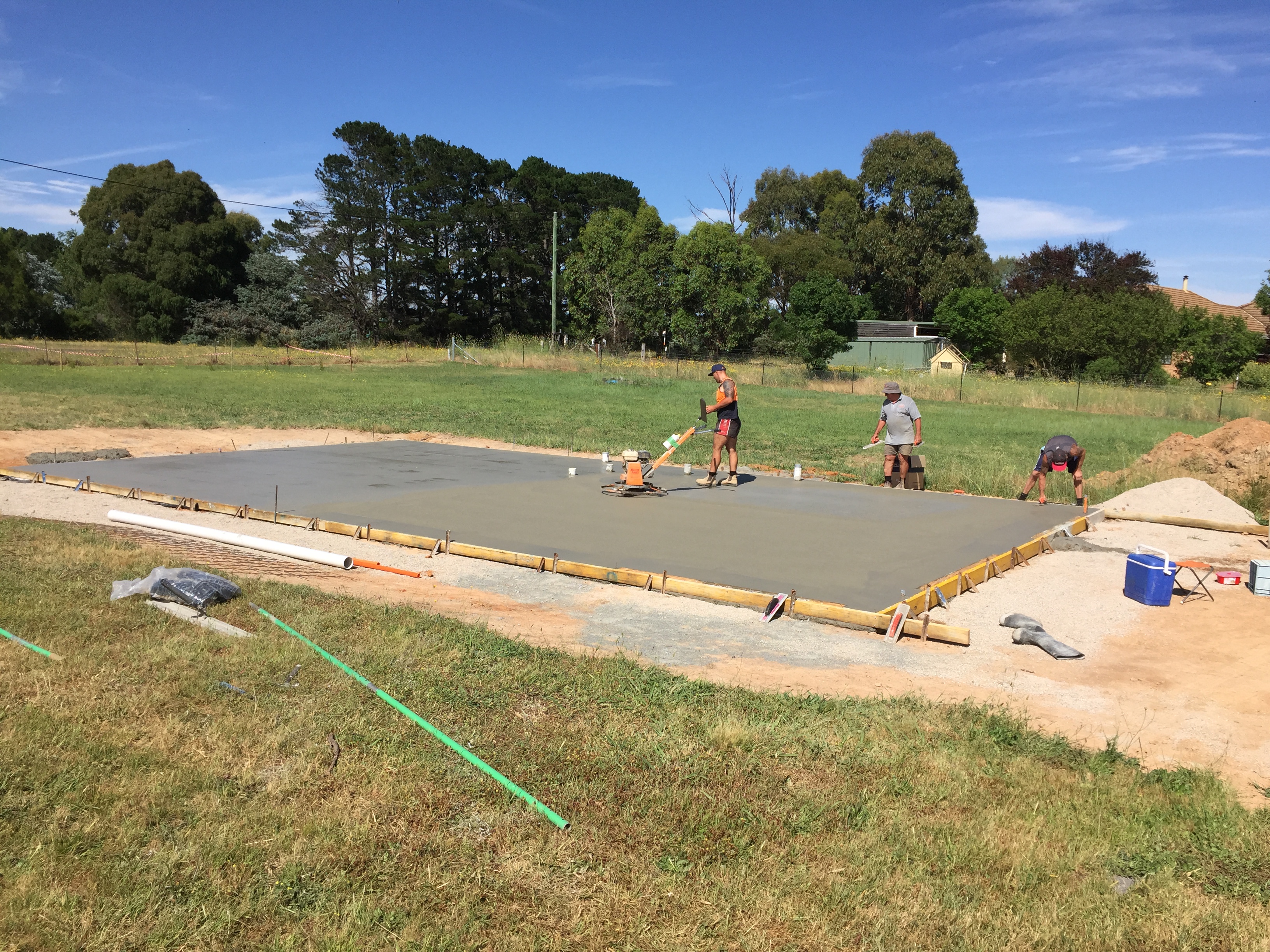
December 2016: Concrete!! With Christmas looming, and still hoping that the shed frame at least might go up by Christmas Eve (obviously we’d long abandoned any idea of moving in!) we went right down to the wire, with endless phone calls to the concreter and the shed builder to try and keep things on track while we waited for dry weather.
In the end we had a beautiful, smooth slab to have Christmas drinks on, and the builder locked in for Thursday 5th January 2017 to start erecting the shed frame.
Next: Building Begins!


Would love to see how this all turned out. Looking to do a similar thing.
LikeLike
Hi Jim,
Thanks for your message, and great to hear that you’re considering building a shed house! We are still loving living in this home and have had so many positive comments, particularly from first-time visitors (usually along the lines of, ‘Wow, this isn’t what I was expecting!’ right after they walk in the door). 😊 We’ve never had any regrets and highly recommend it to anyone who asks!
Your message also reminded me that I am LONG overdue to post an update. The house and surrounds look quite different now, although still a work in progress (does it ever end? 😆).
In fact, we will be kicking off Stage 2 of the build this year – finally! Only 3yrs later than planned 😉 We’ve been very comfortable living in this space, but with our oldest child approaching the teenage years, and aging parents, we need more bedrooms and a little more living space. We’ve been very fortunate to have such a small mortgage all this time – one of the many benefits of this type of build.
I’m assuming you’ve read my later posts as well? (Budget, and ‘Using a shed frame for a proper house’) – they might help with your planning process, if you decide to go ahead.
Meanwhile I’ll get working on an update so you can see how it all turned out.
If there is anything particular you’re wondering about, please give me a shout – we’re very happy to share our experience if it’s useful.
Thanks Jim and all the best with your plans!
Cheers
Kirsty
LikeLike